
Yemen Central Bank Revokes Exchange Firms and Agents Licenses
AML Network•August 27, 2026
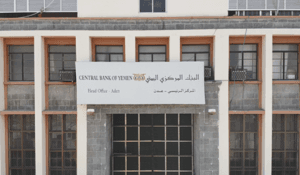
A central bank withdrawing the licences of money exchange businesses is a supervisory action with unusually direct consequences, because in many economies exchange houses are not a convenience but the main way households receive money from abroad. The background below explains what those firms do, why supervisors act against them, and what the humanitarian stakes are in a country where the formal banking system is fragmented.
What money exchange businesses do
Exchange firms and their agents sit in the category the Financial Action Task Force calls money or value transfer services. They convert currency, receive and pay out remittances, and in some markets hold balances and settle between traders. Where bank branch networks are thin or correspondent banking relationships have been withdrawn, they carry a large share of cross-border flows, including salaries, family support and payments for imported food, fuel and medicine.
Why they are treated as high risk
The same features that make these businesses useful make them attractive to abuse. Transactions are frequently cash-in and cash-out, which breaks the audit trail at both ends. Agent networks push the customer relationship down to operators who may have limited training and no independent compliance function. Settlement between houses often happens through offsetting positions rather than through payment messages, so an individual transfer may leave no traceable instruction at all. Standard supervisory expectations therefore include registration or licensing, customer identification above defined thresholds, retention of originator and beneficiary information with transfers, suspicious transaction reporting, and accountability of the principal for the conduct of its agents.
Common grounds for revoking a licence
- operating outside the terms of the licence, or through unregistered agents
- failure to apply customer due diligence or to keep the required records
- dealing at rates or in currencies the central bank has restricted, or participating in parallel-market speculation
- non-submission of returns, or refusing an on-site inspection
- handling funds connected to sanctioned parties or to designated groups
- shortfalls in capital or in customer funds held for settlement
The complication of a divided monetary authority
Yemen's particular difficulty is institutional. The country has operated with competing monetary authorities in different territories, issuing separate instructions to the same class of businesses and, at points, circulating banknotes accepted in one area and not the other. An exchange house can therefore be compliant with one authority and in breach of the other, and a revocation may be effective only where the issuing authority has practical reach. For the AML analyst, that fragmentation matters because it undermines the assumption behind licensing itself: that a single supervisor can see, and act on, the whole of a firm's activity.
The humanitarian trade-off
Closing non-compliant operators removes channels that can be misused, but it also removes channels people depend on. The recognised risk is displacement: when licensed routes narrow, value moves through informal networks that no supervisor sees, and aid organisations lose the ability to move funds through documented channels. This is the same dynamic that international standard-setters describe as de-risking, and it is why supervisory guidance generally pairs enforcement against individual firms with measures to keep a compliant route open — proportionate requirements for low-value remittances, clear expectations for banks serving the sector, and a defined path back to licensing for firms that remediate.