
Report: Global AML Oversight or Regulatory Opacity? Investigating FATF Transparency in the UAE Delisting Decision
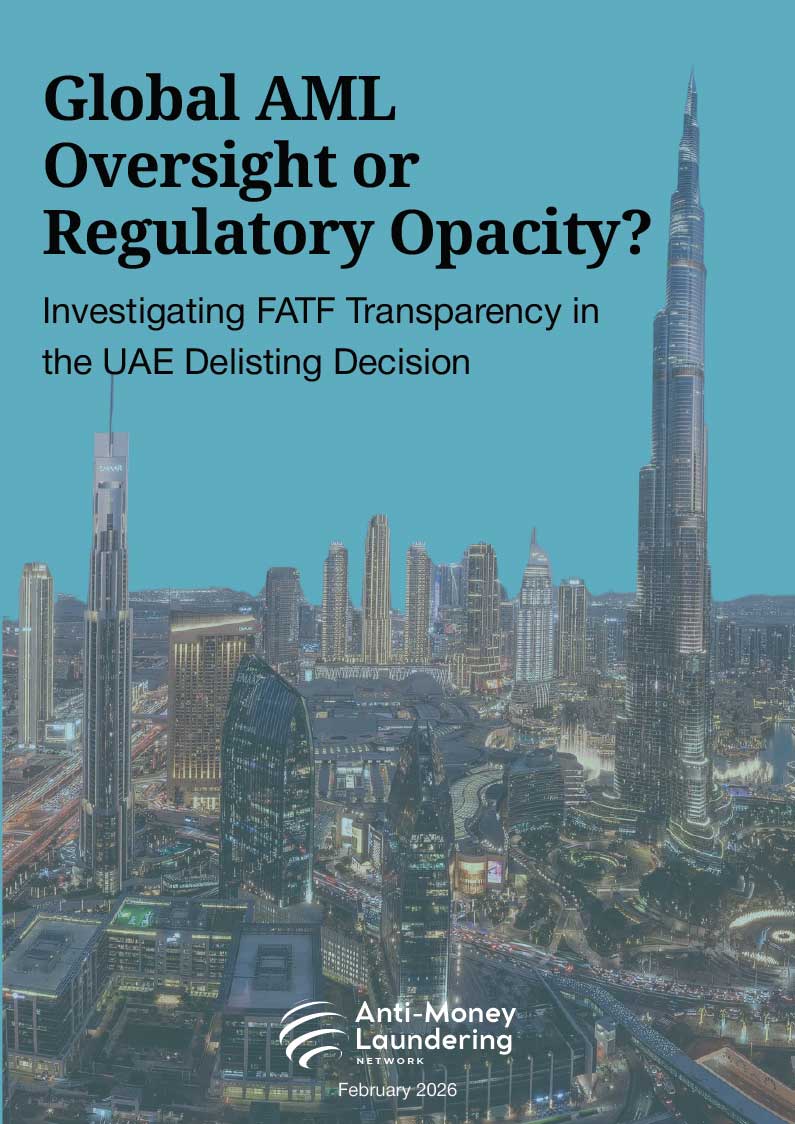
What the report examines
The subject is the Financial Action Task Force's decision to remove the United Arab Emirates from its list of jurisdictions under increased monitoring, and the question the headline raises is not whether that outcome was correct but whether the reasoning behind it was made adequately visible. The two are separable. A delisting decision can be technically well founded and still rest on an evidentiary record that outside parties have no means of inspecting.
How listing and delisting work
FATF assesses jurisdictions against its forty Recommendations through mutual evaluations conducted by peer review teams. Where an evaluation identifies strategic deficiencies, the International Co-operation Review Group may recommend that the jurisdiction be placed under increased monitoring — the status commonly described as the grey list. Listing is accompanied by an agreed action plan setting out specific items and deadlines. Exit follows a defined sequence:
- The jurisdiction reports progress on each action plan item to a joint group of FATF and regional body assessors.
- FATF makes an initial determination that the items have been largely addressed.
- An on-site visit is conducted to verify that reforms are implemented and sustainable, rather than legislative on paper.
- The plenary, which meets three times a year, takes the final decision by consensus of members.
Where the transparency questions arise
FATF publishes mutual evaluation reports, follow-up reports and plenary outcome statements. It does not routinely publish the underlying assessment material, the on-site team's detailed findings, or any record of what individual member delegations argued. Because decisions are reached by consensus rather than by recorded vote, there is no public trace of dissent. That design is deliberate, in that it protects candour between members, but it also means an external observer cannot independently test whether a delisting reflected verified effectiveness or the diplomatic weight of the jurisdiction concerned. Investigations in this area generally probe that gap in the record rather than assert a particular motive.
What delisting changes in practice
Grey listing does not, under FATF's own terms, oblige members to apply enhanced due diligence; it requires that the information be taken into account in risk assessment. Banks routinely go further than that, and removal from the list tends to feed through into country risk models, correspondent banking appetite and monitoring thresholds. It is not the only list that matters, however. The European Union maintains a separate register of high-risk third countries, national regulators keep their own, and removal from one does not automatically alter the others. Nor does delisting retire the underlying typologies — trade-based laundering, free zone opacity, cash-intensive dealing in high-value goods — that prompted the original listing.
How to read an investigation of this kind
Reports in this space are strongest when they are documentary. They set action plan commitments against publicly evidenced reform, track supervisory and enforcement statistics over time, seek disclosure of process records wherever access rights exist, and place FATF's conclusions alongside the assessments of other bodies covering the same jurisdiction. Readers should check what each claim rests on, and should treat the distinction between a documented process failure and an inferred political explanation as the central test of the work.