
Report:The UAE’s Gold Trade and RSF’s Genocidal Campaign in Sudan
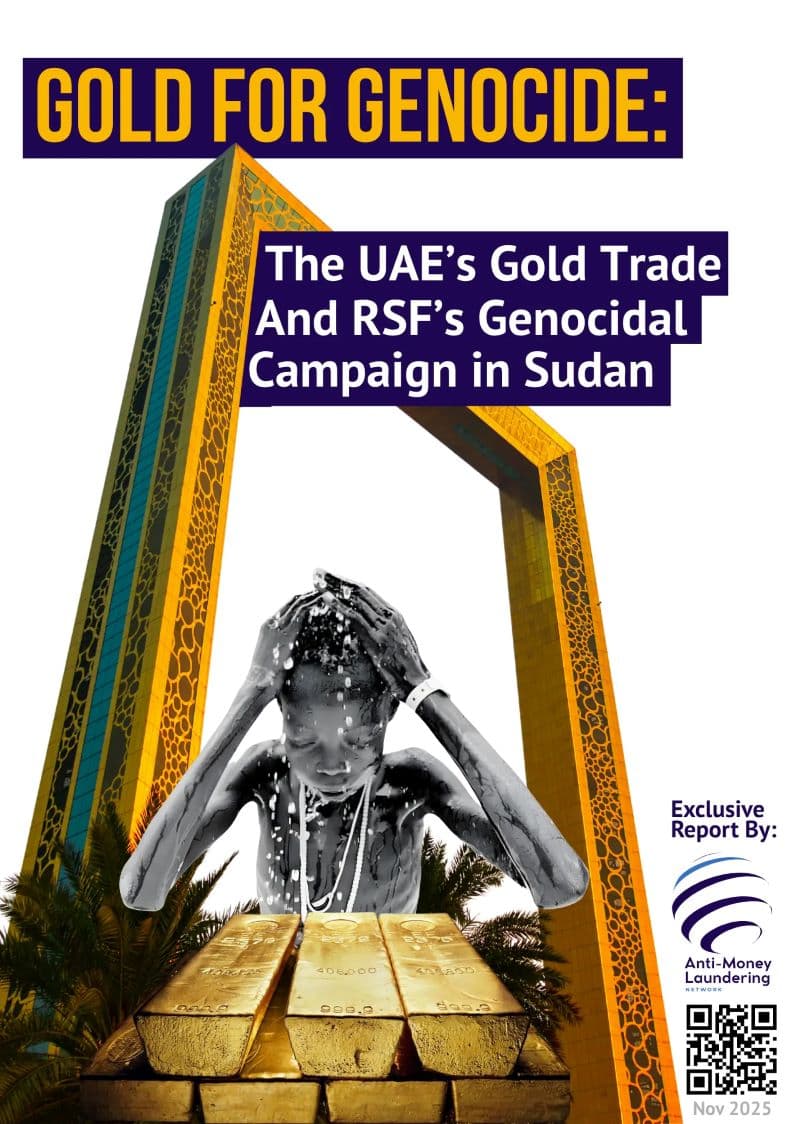
What an investigation of this kind sets out to establish
The headline joins two subjects: the United Arab Emirates' position as a major hub for gold trading and refining, and the conduct of the Rapid Support Forces in Sudan, which the report characterises as a genocidal campaign. Reduced to a research question, that is a conflict finance and supply chain inquiry. It asks whether gold produced, taxed or seized in a war zone is converted into usable revenue for an armed party, by what route, and at which point in the chain due diligence ought to have interrupted it.
Why gold suits armed groups
Gold is among the most durable instruments in conflict finance, for reasons that are structural rather than incidental:
- Value density — a quantity worth a great deal can be carried by one person across a border.
- Fungibility — once smelted and refined to a recognised standard, a bar carries no marker of the pit it came from.
- Independence from banking — it can be exchanged hand to hand, outside any system that generates a transaction record.
- Diffuse production — artisanal and small-scale mining is dispersed, informal and poorly documented, so output figures are inherently soft.
- Convertibility — it translates readily into hard currency, and from there into fuel, salaries and matériel.
The chain from pit to bullion
A typical route runs from artisanal producers to local buyers, then to consolidators who aggregate small parcels, then across a border — often undeclared, under-declared or misdescribed — into a regional trading centre. There the metal is refined, assayed and enters the legitimate market as bullion, from which it passes to jewellery manufacture, investment products or industrial use. The critical feature is that the point of laundering is the refinery, not a bank: refining is where origin ceases to be physically traceable. Armed groups need not mine gold themselves to profit from it; control of mine sites, transport corridors, or the levying of taxes and protection payments on traders is sufficient.
The due diligence framework and where it strains
The principal standard is the OECD Due Diligence Guidance for Responsible Supply Chains of Minerals from Conflict-Affected and High-Risk Areas, which sets out a five-step, risk-based process covering management systems, risk identification, mitigation, independent audit and public reporting. Industry schemes such as the London Bullion Market Association's responsible sourcing requirements apply it to accredited refiners. FATF's Recommendations extend anti-money-laundering obligations to dealers in precious metals and stones. The framework strains where it meets refiners outside accreditation schemes, cash purchases, free zone and re-export trade with limited disclosure, reliance on supplier self-attestation instead of verification, and mass-balance accounting that mixes material from many origins.
Implications for compliance and procurement teams
Firms exposed to this trade — banks financing it, refiners, jewellers, trading houses — generally respond by treating conflict-affected source countries as high risk by default, verifying refiner accreditation and audit status rather than accepting assurances, screening counterparties and beneficial owners against applicable sanctions regimes, examining trade documentation for mis-invoicing and undervaluation, securing contractual audit and disclosure rights, and treating credible adverse reporting as a trigger for enhanced review and, where warranted, a suspicious activity report.