
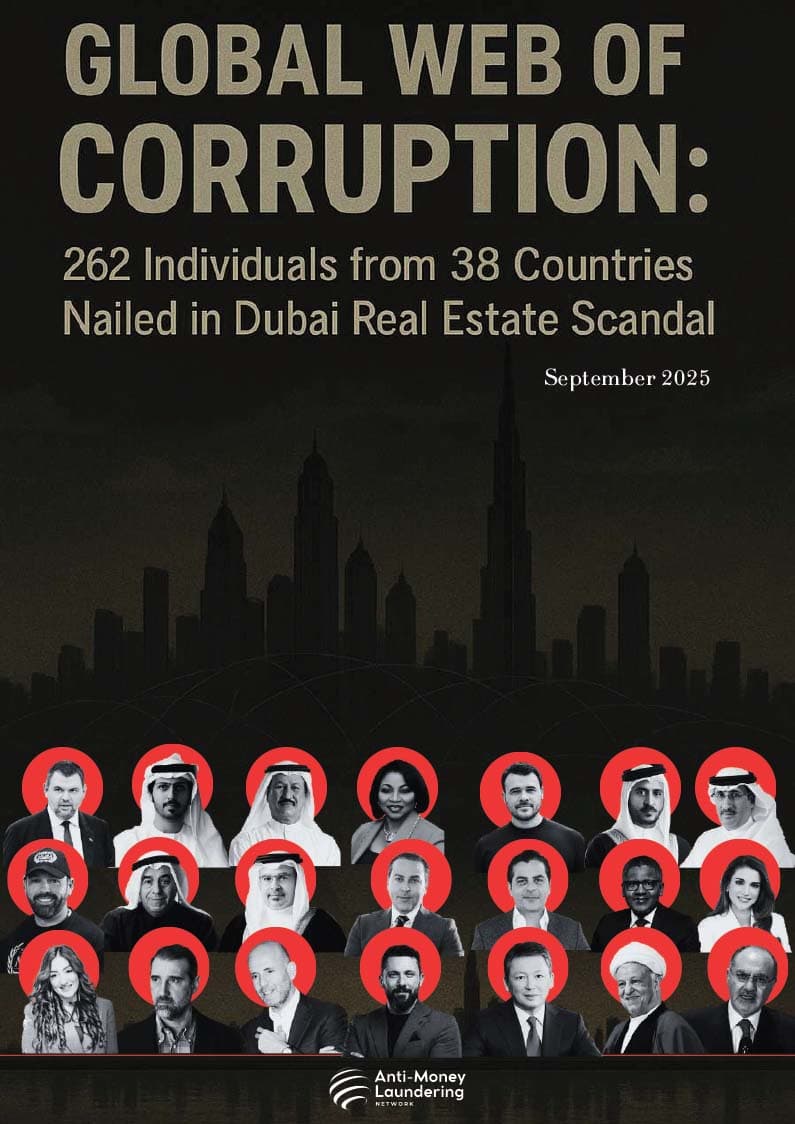
Report: Global Web of Corruption: 262 Individuals from 38 Countries Nailed in Dubai Real Estate Scandal
What a report of this kind sets out
The headline makes a single assertion: that 262 individuals drawn from 38 countries have been identified in connection with a Dubai real estate scandal. Everything a reader needs in order to weigh that number — who compiled the list, from which records, on what matching test, and what each named person is said to have done — sits inside the report itself. This page sets out the background against which such a report should be read, rather than restating conclusions only the underlying evidence can support.
Cross-border property investigations normally open by defining their population: the dataset examined, the period it covers, the jurisdictions represented, and the threshold applied before a name is included. Without those definitions a headline count is not interpretable, because the same records can yield very different totals depending on whether the test is a sanctions designation, a criminal conviction, an unexplained source of wealth, or simple proximity to a person of interest.
Why property attracts illicit funds
Real estate is one of the oldest laundering channels because it solves several problems for the holder of criminal proceeds at once. The features that make it attractive are structural rather than particular to any one city:
- Large sums can be placed in a single transaction, without the repeated deposits that trigger banking alerts.
- Ownership can be held through companies, trusts or nominees, separating the legal owner on the register from the person who actually benefits.
- Valuation is partly subjective, so prices can be inflated or suppressed to move value between parties.
- Rental income supplies a plausible explanation for funds arriving later in a bank account.
- Resale converts the asset back into money with a documented, lawful-looking origin.
How such investigations are assembled
The typical method is record linkage. Property or title data — sometimes obtained through leaks or whistleblowers — is matched against sanctions designations, politically exposed person references, corporate registry filings, court and insolvency records, and published reporting. The hardest technical problem is entity resolution: names transliterated inconsistently between scripts, common surnames, and incomplete identifiers can produce false matches. Careful teams state their matching criteria, distinguish confirmed from probable identifications, and put allegations to those named before publication.
The regulatory framework in the background
In most jurisdictions estate agents, brokers, lawyers, notaries and company service providers are treated as designated non-financial businesses and professions. That brings obligations to identify customers and beneficial owners, to establish source of funds and, for higher-risk clients, source of wealth, and to report suspicion to the national financial intelligence unit. Supervisors generally hold powers to inspect, to impose fines and licence conditions, and to require remediation. Above the national layer sit mutual evaluations by the Financial Action Task Force and its regional bodies, whose findings have driven substantial reform of property-sector supervision in a number of countries, the United Arab Emirates among them.
What inclusion does and does not mean
Appearing in a dataset of this kind is not a finding of wrongdoing. Many people hold property through corporate vehicles for tax, privacy or succession reasons that are entirely lawful, and a register entry records ownership rather than the origin of the money behind it. For compliance teams the appropriate response is proportionate: rescreen affected relationships, run a look-back over transactions and onboarding files, assess adverse media on its merits, escalate to senior management where risk appetite is exceeded, and document the reasoning either way. Published research is intelligence to be tested, not a determination to be adopted.